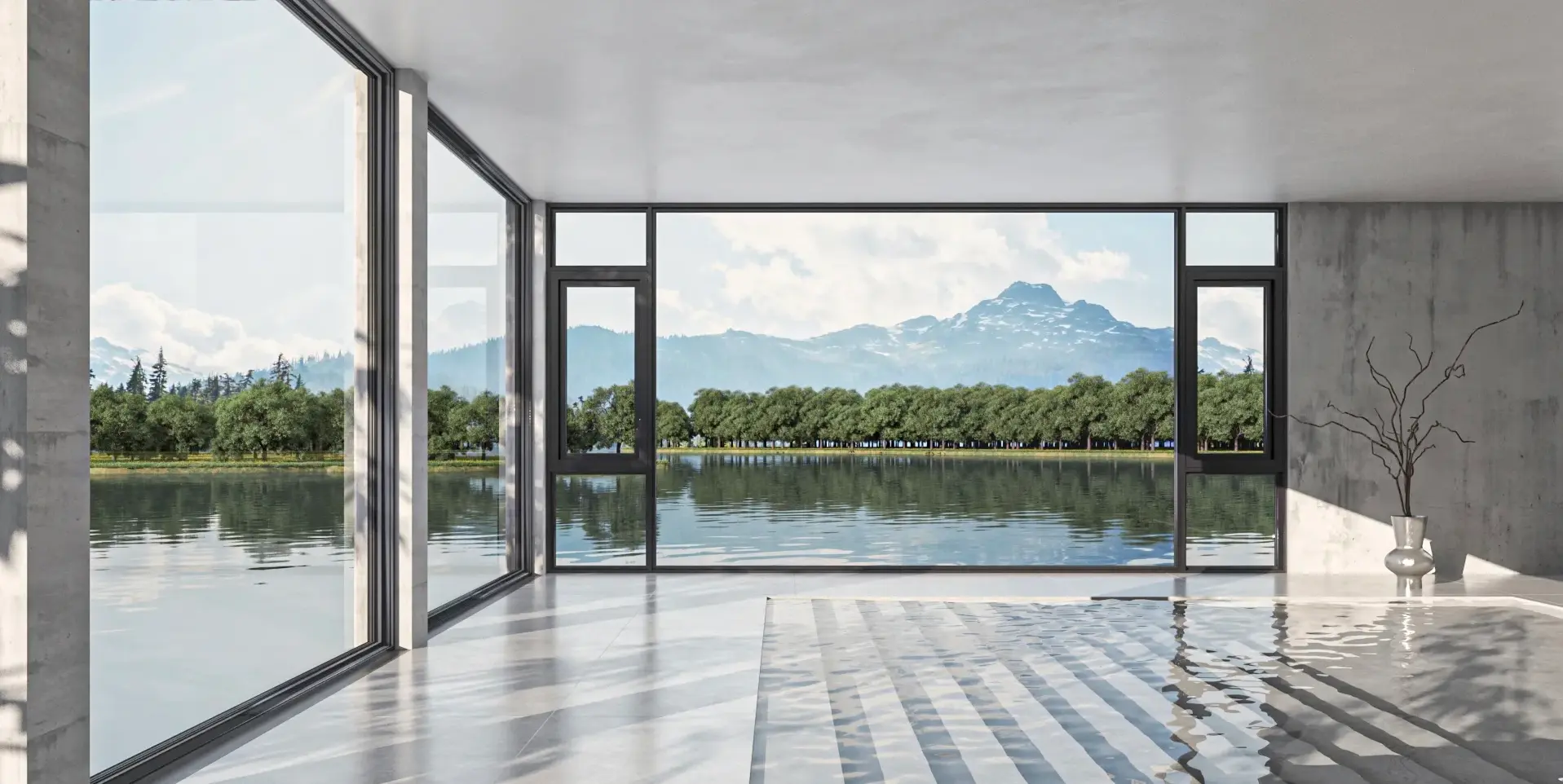
Windows and doors are the “eyes” and “ventilators” of a building. In home renovations or new construction projects in Europe and North America, choosing the right aluminum windows and doors affects not only aesthetics and comfort but also energy bills. Faced with terms like thermal break, insulated glass, Low-E, and system windows, many people feel confused. This article uses ALuEcho, a high-end window and door brand, as an example to walk you through the core knowledge of aluminum windows and doors, helping you make informed choices in the Western market.
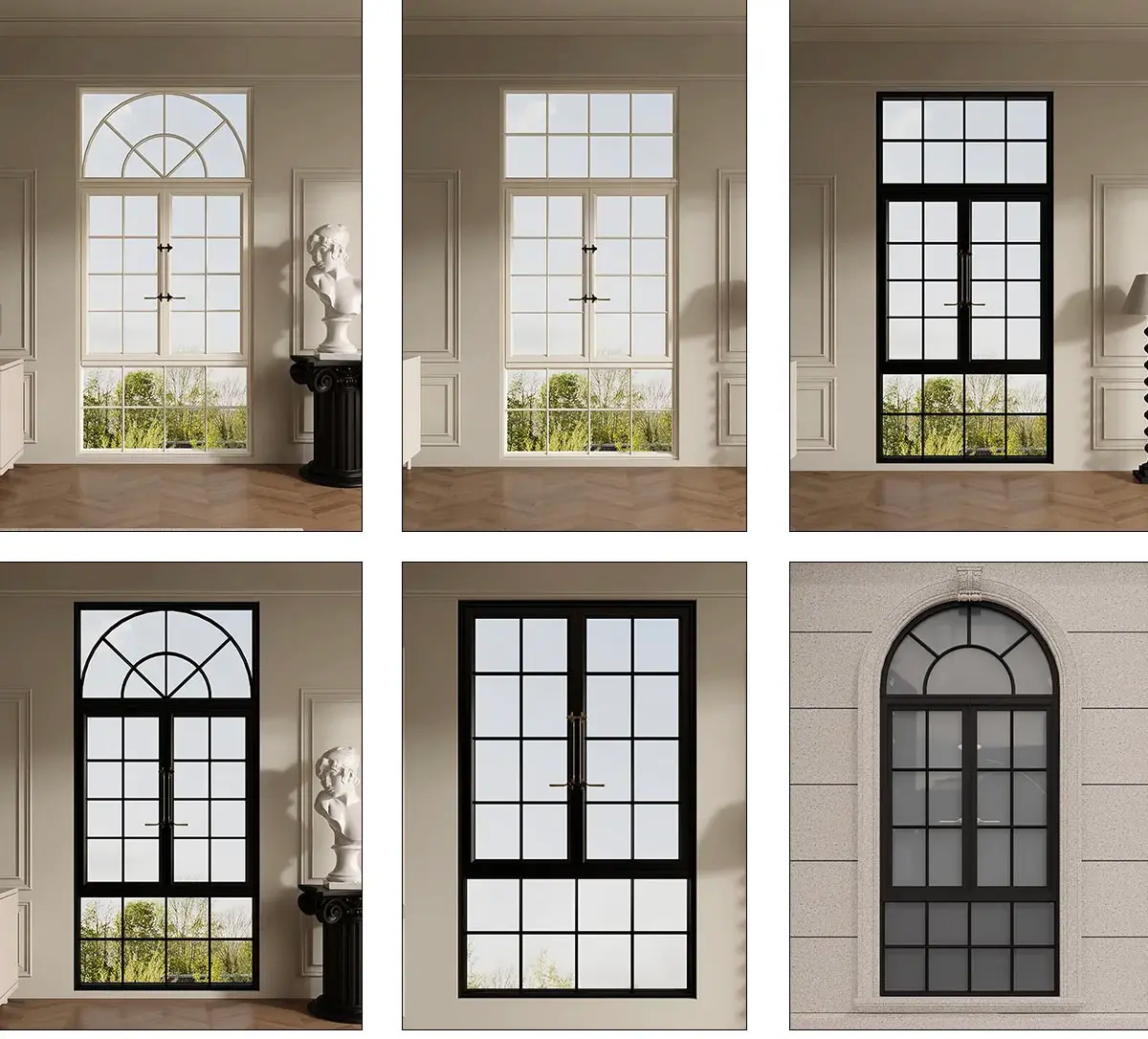
1. Frame Profiles: Standard Aluminum vs. Thermal Break Aluminum
1.1 What is standard (non-thermal break) aluminum?
The interior and exterior are directly connected through metal – the entire profile acts as a thermal conductor. While low in cost, it transfers heat quickly and offers poor insulation, significantly increasing heating and cooling bills in cold or hot climates.
1.2 What is thermal break aluminum?
The “bridge” in “thermal break” refers to the path of heat transfer. A thermal break aluminum profile uses a strip of material with very low thermal conductivity – usually PA66 nylon, meeting EN 14024 or AAMA standards – to separate the interior and exterior aluminum sections while still connecting them as one structural unit. This cuts off the heat-transfer “bridge,” achieving excellent insulation. High-quality thermal break profiles are available in many colors to suit diverse architectural styles in Western markets.
1.3 Key differences
Standard aluminum: The whole profile conducts heat/cold – a “cold bridge” problem.
Thermal break aluminum: The insulating strip blocks heat transfer, greatly improving energy performance and offering more color choices.
All ALuEcho profiles are manufactured with PA66 thermal break strips and multi-chamber designs, strictly following European standard EN 12020, delivering excellent U-values while maintaining high strength.
1.4 What wall thickness is required?
European and North American standards differ slightly, but general recommendations are:
Windows: Minimum wall thickness of 1.4 mm (common in Europe) or 1.6 mm (suggested by AAMA in the U.S.).
Doors: Minimum wall thickness of 1.8 mm to 2.0 mm.
If a single sash is large (e.g., over 3-4 m²) or the building is in a high-wind zone (coastal areas, high-rise), consider thicker profiles or adding mullions.

2. Glass: IGU, Laminated, Low-E, and Blinds – How to Choose?
Glass accounts for more than 70% of a window’s surface area and is key to performance. In Western markets, glass typically meets NFRC or EN 1279 standards.
2.1 Insulated Glass Unit (IGU)
Two or more glass panes are sealed at the edges, filled with dry air or inert gas (argon or krypton), and contain a desiccant. IGUs effectively reduce heat and sound transmission.
With standard thermal break windows: U-value approx. 2.7–3.0 W/m²K
With standard non-thermal break windows: U-value approx. 3.5–5.0 W/m²K
With high-performance system windows: U-values can reach 1.4–2.0 W/m²K
Sound insulation: IGUs work well against mid- to high-frequency noise but are less effective against low-frequency noise (e.g., highways, heavy trucks). For low-frequency noise, consider laminated glass or asymmetric glass configurations.
Warranty and lifespan: In European practice, IGU seal warranties are typically 5–15 years, with an overall service life of 15–25 years. Damage caused by misuse or improper installation is not covered.
2.2 Low-E glass
Low-emissivity glass is coated with a microscopically thin, transparent layer that reflects far-infrared heat radiation – keeping outdoor heat out in summer and indoor heat in during winter. It also blocks some UV rays (but not 100%). Many Western building codes now require at least dual silver Low-E glass for windows. For strong UV protection, choose laminated glass instead.
2.3 Laminated glass
Two or more glass panes are bonded with one or more layers of PVB or SGP interlayer under heat and pressure. If the glass breaks, fragments adhere to the interlayer, preventing falling hazards.
In Western countries, laminated glass is mandatory or strongly recommended for:
Sloped roofs, skylights, and canopies
Frameless glass doors, pivot doors
Glass railings, balustrades, stair sides
Kindergartens, schools, gymnasiums, and other public buildings
Out-swing windows on buildings above 7 stories (fall prevention)
Any glazing subject to human impact (must meet ANSI Z97.1 or EN 12600)
2.4 Sealed-unit blinds
Metal aluminum blinds are installed inside a sealed IGU and controlled magnetically or electrically. Advantages: dust-free, no cleaning required, integrated shading. Lifespan approx. 20,000 cycles (about 20 years).
2.5 Quick comparison of the three glass types
IGU: Best energy efficiency (heat/cold insulation), good value
Low-E glass: Improves thermal performance plus some UV reduction
Laminated glass: Safety, fall prevention, good noise reduction (especially for low- to mid-frequencies)
3. Performance Metric: What is U-value?
The U-value (thermal transmittance) measures how fast heat passes through a material. Lower U-value = better insulation. Building energy certifications like ENERGY STAR and Passivhaus have strict U-value requirements for windows and doors.
Standard non-thermal break aluminum: U ≈ 3.5–5.0 W/m²K
Typical thermal break aluminum: U ≈ 2.5–3.0 W/m²K
High-performance system windows (e.g., ALuEcho): U as low as 1.4–1.6 W/m²K (with triple IGUs, warm edge spacers, argon fill)
Passivhaus-certified windows: U ≤ 0.8 W/m²K (requires thicker thermal breaks and specialty glass)
Note: Actual U values depend on glass configuration, thermal break width, and chamber design. Always check NFRC or CE certification labels.
4. Opening Styles & Hardware
Common opening styles in Western markets:
Sliding windows: Move horizontally – space-saving, but moderate airtightness. Hardware: rollers, latches.
Casement windows: Hinged on the side and swing outward or inward – excellent airtightness, very popular in Europe. Hardware: friction stays, hinges, handles.
Tilt and turn windows: Originated in Germany. The sash can tilt inward from the top for ventilation (while remaining secure), or turn inward like a casement for full opening. Tilt position provides safe rain proof ventilation and burglar resistance; widely loved in Europe. Hardware: multi-point handles, linkage rods, locking points.
Top-hung / awning windows: Hinged at the top, pushing outward.
Fixed windows: Non-operable, only for light transmission.
How to choose?
Rainy climates, high-rise buildings: Prefer tilt and turn or awning windows.
Budget-conscious with low ventilation needs: Sliding windows.
Traditional look with best possible sealing: Casement windows.
For hardware, choose reputable European brands like Roto, SIEGENIA, GU or stainless steel components to ensure longevity.
5. System Windows – A Higher-Level Solution
What are system windows?
System windows originated in Europe (especially Germany). Unlike simple “good profile + good hardware + good glass” assembly, system windows are designed, tested, and certified as a complete solution. A system supplier guarantees water tightness, air tightness, wind load resistance, thermal insulation, acoustic insulation, burglary resistance, weather resistance, operating comfort, and more. Every component – profiles, thermal breaks, seals, hardware, glass, even installation accessories – is matched and validated. They typically carry CE marking or Passivhaus certification.
ALuEcho is a prime example of the system window philosophy – its entire product range has passed all relevant European standards and undergone rigorous whole-window testing in accredited laboratories. Whether for a new Passive House or an old-home energy retrofit, ALuEcho delivers minimalist aesthetics and high performance.
6. Manufacturing, Packaging & Warranty
Key production steps
Precision cutting (tolerances within ±0.2 mm)
Corner crimping with adhesive injection (prevents water penetration at corners)
Fine adjustment of hardware
Visual inspection for scratches and colour consistency
Packaging
Windows are typically wrapped in anti-abrasion paper or plastic film, fitted with corner protectors, and shipped in wooden crates or heavy-duty cartons suitable for long-distance Western logistics.
Typical warranty terms (common in Western markets)
Profiles and surface finish: 5–15 years (non-fading, no peeling)
Insulating glass units: 5–10 years (against seal failure)
Hardware: 2–5 years
Installation sealants: 15–20 years (but require periodic inspection)
Damage from misuse, extreme weather (e.g., hurricanes), or improper cleaning is not covered
Sealant service life
High-quality silicone sealants can last 20+ years under normal exposure conditions.
7. Practical Advice for Consumers
Check certifications: Look for NFRC labels (U.S./Canada), CE marking (EU), Passivhaus certification (Passive House projects), or ENERGY STAR.
Don’t focus only on upfront price: High-performance windows cost more initially but can save 30–50% on heating/cooling bills – a significant long-term return.
Glass safety: Always use tempered or laminated glass for floor-to-ceiling windows, skylights, and glass doors. Ensure compliance with local building codes (e.g., U.S. IRC or UK Document K).
Installation quality determines final performance: Even the best ALuEcho system windows will leak air and water if not installed with proper weather-resistive barriers, expanding foam, and perimeter sealing. Hire certified installers.
Match windows to your climate:
Cold climates (e.g., Canada, Nordic countries): Choose triple IGUs, Low-E coating, warm edge spacers, and target U ≤ 1.2 W/m²K.
Hot climates (e.g., Southern U.S., Southern Europe): Consider dual-silver Low-E, external shading, or sealed-unit blinds.
Hurricane/typhoon zones: Use reinforced profiles + laminated glass.
Whether you are building a new home, renovating an older one, or simply learning about high performance products like ALuEcho, this guide will help you communicate more effectively with architects and suppliers. For specific project needs, please contact us.